
Can Invisalign Fix an Overbite?
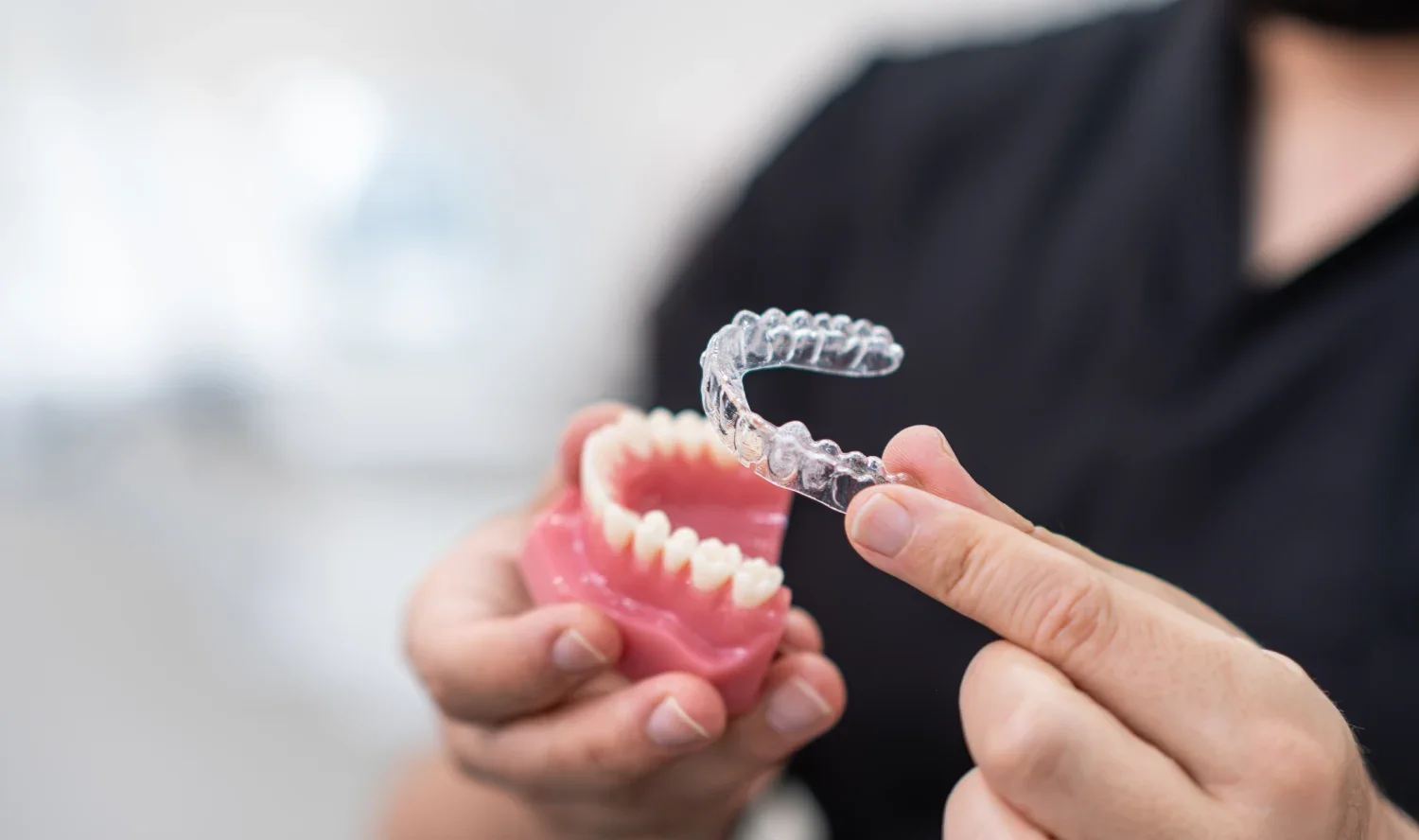
Invisalign can fix certain types of overbite by improving the way your upper and lower teeth meet. Many mild to moderate overbite cases respond well to this orthodontic treatment, which is also a great way to enhance your smile discreetly.
If you’re in the Wirral, we encourage you to come see us at Wallasey Village Dental Practice for a professional assessment, so we can check if Invisalign aligners are the best option for your overbite.
What’s an overbite?
An overbite occurs when the upper teeth overlap the lower teeth. It’s normal if your upper teeth are slightly covering only a small portion of the lower set. This position actually protects the lower teeth and makes chewing easier. On the other hand, a severe overbite affects not only how your smile looks, but also the way your teeth function.
Normal overbite: When the upper teeth cover approximately 2 to 3 mm of the lower ones.
Deep overbite: Occurs when the upper teeth overlap the lower set by 4 mm or more.
When you have severe overbite, you might encounter some of these issues:
Teeth wearing down prematurely
With a severe overbite, the constant pressure from the lower teeth pushing against the back of the top ones causes the enamel to wear fast. You might also notice the backs of your upper teeth slowly chipping when your overbite is severe. An Invisalign treatment fixes how your upper teeth rest on your lower teeth, reducing the friction that can wear out the enamel prematurely.
Jaw pain
Problems with your bite put a lot of stress on your jaw joint. For some patients, correcting an uneven bite can ease that strain. If jaw pain is a main concern for you, we’ll check whether it’s linked to your bite during your Invisalign consultation.
Gum problems
In severe cases of an overbite, the lower teeth can hit the upper gums and the roof of the mouth. The constant friction and force can injure these tissues, resulting in gum problems. By improving the bite, Invisalign can reduce friction between the lower teeth and upper gums.
Difficulty biting or chewing
When your upper teeth overlap the lower ones too much, it’s challenging to bite or chew on food properly. Eating may even be uncomfortable as your teeth and jaw try to compensate for the misaligned bite.
Aesthetic concerns
A deep overbite can affect your smile and make it look uneven, especially if your upper teeth look too prominent.
Can Invisalign fix an overbite?
Yes, it can treat mild to moderate cases of overbite. The clear Invisalign aligners gradually reposition the upper or lower teeth, improving how they come together at rest or when you bite.
However, it can’t fix all types of overbites. More complicated cases, such as when the jawbone itself is misaligned, require conventional dental braces or even surgery.
How Invisalign corrects an overbite
Invisalign fixes an overbite by moving the upper teeth backward or shifting the lower ones forward. It repositions the front teeth so the top ones don’t protrude as much, overall improving your bite.
Invisalign uses these to correct an overbite:
Clear aligners
These custom-made trays go over your teeth to slowly move them to the correct position. They’re almost invisible, so they’re preferred by people who want an orthodontic treatment that’s less obvious than dental braces.
Attachments
In some cases, we use Invisalign attachments with the aligners to fix an overbite. These tiny bumps are nearly invisible and custom-made to fit perfectly on your teeth. They help the aligners apply extra force, especially if one or more teeth need to move more than the others.
Elastics
Invisalign aligners and attachments reposition the teeth, while elastics work on improving jawbone alignment. Typically, we recommend using elastics if aligners alone are not enough to correct an overbite. We attach these elastic bands to corresponding slots in the aligner tray or onto tiny buttons attached to the teeth. They put extra force on the upper and lower jaws to fix bite problems such as overbites, crossbites, or underbites.
Takeaway
An overbite doesn’t have to be something you simply learn to live with. For many patients, Invisalign offers a discreet and comfortable way to fix an overbite, especially if you’re not keen on getting metal braces. After a thorough dental and orthodontic examination, we will assess your bite and tooth alignment before discussing the treatment options available, and if Invisalign is suitable for your overbite. We’ll then create a personalised treatment plan for your specific needs, so we can help you feel confident about your smile.
If you’re concerned about an overbite and would like to find out if Invisalign could be right for you, we can help. Get in touch with our friendly team at Wallasey Village Dental Practice to schedule your Invisalign consultation in the Wirral.
FAQs
-
It depends on case severity, with mild overbites typically improving in 6 to 12 months, and moderate cases taking 12 to 18 months. On the other hand, severe overbite cases may take as long as 18 to 24 months because the teeth need more time to move to the correct position.
-
Yes, it can fix mild to moderate deep overbites. The clear aligners will either push the top teeth inwards or push the lower ones forward to reduce the overlap. However, if the deep overbite is caused by skeletal issues with the jawbone, then conventional dental braces might work better than Invisalign.
-
Yes, it can correct these issues simultaneously. The aligners gradually move the teeth to correct issues such as crowding and spacing. At the same time, they work to push specific teeth on either arch, so that the upper teeth don’t jut out too much over the lower ones.
-
First, you’ll need a professional dental assessment to check the condition of your bite and tooth alignment. The exam will help us determine if Invisalign will work on your specific overbite issues. Generally, this treatment is ideal for mild to moderate cases, but if it’s not suitable for you, we’ll recommend other options to fix your bite.